Habermas’s Legacy: The Philosophy of the Public Sphere
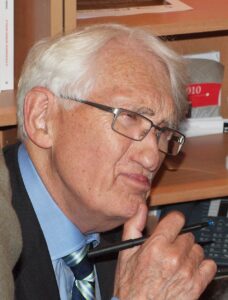
The German philosopher Jürgen Habermas died on Saturday March 14th, 2026, aged 96. With his passing the public lose a philosopher, social theorist and public intellectual who has arguably done more than any other to explain, protect and promote the ideals and actuality of universal morality, liberal democracy, and democratically legitimate law. He was honored with thousands of expressions of recognition and condolence from around the world, among which I pick out just one. The UN Secretary General António Guterres, who himself sometimes seems like a lone sane voice in a chaotic world, wrote: “No philosopher influenced my own thinking throughout my life in politics as much as Jürgen Habermas.”
Who was Habermas?
Habermas was a singular post-war German philosopher and social theorist who emerged from the Frankfurt School tradition of critical social theory. He is often described as the leading light of the second generation of the Frankfurt School, but that designation is misleading. When he first arrived at the Institute of Social Research in Frankfurt in 1954, Habermas was over thirty years younger than the then director, Max Horkheimer. Though there are continuities of thematic concern between his early work and that of his predecessors Horkheimer, Theodor W. Adorno and Herbert Marcuse, they are deep lying and not always obvious. Habermas’s style of theorizing is quite unique, and the major thematic concerns of his work are problems in post-WWII Western societies marked by tensions between the demands of capitalism and the ideals of constitutional democracy.
Habermas’s political personality was formed early and forged in opposition to unrepentant Nazi and conservative elements in the Adenauer regime. In 1953, as a student at Göttingen University, he was outraged to discover that Martin Heidegger — a philosopher he greatly admired — had republished a lecture originally written in 1935 in which he spoke of “the inner truth and greatness of the Nazi movement,” without retracting or commenting on a word of it. Habermas, then aged only twenty-four, responded with an excoriating letter in the Frankfurter Allgemeine Zeitung. It was the opening move in a career defined by willingness to cull sacred cows and to stir up public debate.
He was a strident critic of regressive tendencies in the political culture of the Federal Republic of Germany and Europe, on both left and right. In 1968, at the height of the student protests in Germany, he directly criticized the protesters for acting out revolutionary fantasies and provoking the authorities into violence. He used the phrase “left-wing fascism” — a term he later retracted — and urged the students to put the latitude granted to them by liberal democratic institutions to work in the service of radical reform. For their part, the left criticized Habermas as a reformist, who set out to stabilize the existing political system, whereas he countered that piecemeal reform could nonetheless be radical, and that under current conditions what Marx called “ruthless critique of everything existing” must take this form. In time, the mutual antagonism subsided, and Habermas came to see the students as a force for the good, in much the same way his teacher and mentor Adorno had: as a harbinger for a better future and a bulwark against regression.
What did he write?
Habermas was a prodigious writer and publisher from his mid-twenties all the way through to his mid-nineties. He leaves around forty volumes of published work. The landmarks include his habilitation thesis, Structural Transformation of the Public Sphere, originally published in 1962, which received a wave of acclaim in English-speaking academic circles when finally translated in 1991. Habermas was one of the earliest theorists of the public sphere and of its importance as a source, first of emancipation from feudalism, and later of democratic legitimacy. His subsequent early work centered on a “transformation of historical materialism,” shifting the focus of Marxist theory away from scientific determinism and toward the centrality of moral consciousness and social evolution.
The most important legacy Habermas leaves is his mature social, moral and political thought. This began with his Theory of Communicative Action, the culmination of a decade of research conducted while he was a Director of the Max Planck Institute in Starnberg in the 1970s. Its central argument is that modern, secular societies contain within their very structures of communication — the way we speak meaningfully to one another — and discourse — the way we argue, justify and persuade — the resources for a genuinely rational, non-coercive social order that would do justice to the ideals of equality, liberty and mutual recognition. Conversely, Habermas argued that the great danger facing modern society is the way in which market and bureaucratic logic steadily undermine and replace those structures: what he called “the colonisation of the lifeworld by the system.”
The companion to his social theory is his Discourse Ethics — a moral theory that is essentially a form of Kantianism focused on how we determine what our moral duties toward one another are. Like Kant, Habermas argues that moral duties have a special stringency and overriding importance. But where Kant holds that each person individually determines what they ought to do by using their own reason, Habermas construes moral practice as a joint effort of argumentation aiming at consensus. We are motivated not by abstract respect for law, but by our constitutive commitment to communication and discourse — because everyone gives and expects others to give reasons for their views, particularly moral ones. The keystone of the theory and touchstone of morality is the ‘all affected’ principle: a norm is valid only if all those affected by it could, under conditions of free and open discourse, agree to it.
Finally, and arguably most importantly, there is his theory of democratic legitimacy, in Between Facts and Norms, which sets out to explain why liberal democratic regimes are particularly good at producing laws with which citizens choose to comply. It is a complex theory, but its most radical and imaginative claim is this: there can be no genuine rule of law without radical democracy — that is, without citizens being able to understand themselves, in a meaningful sense, as the ‘authors’ of the rules they are required to obey. For that to be realized, rational discourses in civil society must be channeled into political discourses in democratic parliaments and enacted in laws and policies.
Habermas’s mature social moral and political theory, is guided by an ideal of a rational society of equals, stabilized and reproduced by communication and reasoned discourse. But the ideal remains for the most part tacit, and his focus is on diagnosing problems that block the development and actualization of this ideal. Legitimation Crisis theorizes the problems democratic governments inevitably face when they try to direct capitalist economies. The Theory of Communicative Action diagnoses problems that emerge in modern societies when bureaucracies and markets expand beyond the arenas of social life to which they had hitherto been confined. Between Facts and Norms sets out to explain how a democratically organized political system and thriving civil society can effectively program legislation in the common good of citizens, and support the waning power of moral norms and ethical world views to cement social and civic solidarity.
Around the new Millennium, Habermas’s social theory changed tack. He had earlier held to a classical secularization thesis — the Weberian and Marxist view that religion is gradually eroded and supplanted in the course of modernization by equivalent secular moral values, which in turn function as sources of normativity that hold society together and allow it to stabilize and to reproduce.
By the 2000’s he had come to regard religions not merely as socially useful sources of ethical values, but as indispensable sources of cognitive and moral reasons — a source of civic solidarity that a ‘post-secular society’ cannot afford to neglect. This transition culminated in a vast three-volume work published in English as Also a History of Philosophy, which reconstructs the dialogue between faith and reason as a social learning process from its origins in the Axial Age (roughly 800–200 BCE, an age where thinkers across Greece, Israel, Persia, India, and China independently developed the first systematic reflections on ethics, transcendence, and human reason) through to the advent of the second millennium — a learning process that nourishes, rather than undermines, the structures of universal morality and liberal democracy. It is one of the most ambitious works of philosophical synthesis of the past fifty years.
Why was Habermas Controversial?
As a staunch defender of Enlightenment values, universal morality and human rights, Habermas attracted fire from anti- and post-colonial critics who charged him with having a Eurocentric or Western-centric conception of modernity and social progress. His position on this is, arguably, more nuanced than his critics allow. In his most recent work, he argued that post-metaphysical thinking and universal morality are concrete results of a learning process that develops along a Western axis, but which has genuine equivalents in other traditions of thought arising from other religious and philosophical cultures. The charges of Eurocentrism, and still less of imperialism, linger, but do not straightforwardly stick.
Though he considered himself at one point “the last Marxist” and remained a lifelong critic of the pathologies of capitalism, Habermas was never radical enough for the left, and remained a painful thorn in the side even of socialist governments, which he occasionally advised, and to which he was broadly sympathetic: he remained a gadfly rather than a useful ally.
Some humanities scholars have never forgiven Habermas for his 1985 broadside in The Philosophical Discourse of Modernity against the then fashionable French thinkers — Foucault, Derrida, and Bataille — whose work, inspired by Nietzsche and Heidegger, he suspected to be a trojan horse for counter-enlightenment and irrationalism in Europe. Whether that suspicion was justified at the time remains moot. Though a related critique applies today, in spades, to the so-called “Dark Enlightenment” thinkers — the ones Laura K. Field aptly calls the “Furious Minds” — who explicitly set out to destroy liberal democratic institutions and replace them with authoritarian and technocratic government. From this perspective, ‘The Philosophical Discourse of Modernity’ might be judged prescient rather than precipitate.
Habermas was always prepared to defend unpopular views on foreign policy. He offered conditional support for the first Gulf War, because it was authorized by UN Security Council Resolution 678. More recently, while endorsing Western military support for Ukraine, he cautioned against the romanticization of war and argued that all parties must pressure both Russia and Ukraine to negotiate. In general Habermas’s interventions on foreign policy demonstrate a commitment to international law and institutional legitimacy, even in the face of push-back from opponents.
The Gaza Statement and Its Impact
Finally, unavoidably, and most controversially of all, there is the matter of the ‘Principles of Solidarity’ A Statement, issued on November 13th, 2023 by the Normative Orders research center at the University of Frankfurt, and signed by Habermas and three colleagues. I risk giving this statement more weight than it deserves. However, it needs addressing if only for the huge backlash it has provoked.
The authors of the statement claim it has been misunderstood. The truth is that it was poorly drafted, misconceived, and badly misfired. It expressed solidarity with Israel and Jews in Germany in the wake of the October 7th attack: yet no solidarity is expressed toward the Palestinians and their suffering. The lines that have drawn most criticism are these: “How this retaliation, which is justified in principle, is carried out is the subject of controversial debate; principles of proportionality, the prevention of civilian casualties and the waging of a war with the prospect of future peace must be the guiding principles. Despite all the concern for the fate of the Palestinian population, however, the standards of judgment slip completely when genocidal intentions are attributed to Israeli action.”
The statement needs some contextualizing. Habermas has always been a reflexive supporter of Israel’s right to exist. It appears to be a deep and unargued precommitment of his formation as a 45er that those who grew up in the shadow of Auschwitz are not in a position to lecture Israel on its foreign policy.
Now there is, it is true, a scintilla of implicit judgment of Israel in the claim that retaliation must be proportionate, avoid civilian casualties, and guided by the aim of peace. But these desiderata have not characterized either the means or the ends of Israel’s foreign policy, since the assassination of Rabin in 1995 and the subsequent failure of the Oslo process. So the faint, implied criticism rings hollow, and perhaps as a consequence, has been widely ignored. The reality is that Israel’s bombardment of Gaza has been utterly disproportionate, and that Israel has shown little or no concern for the prevention of civilian casualties: some call it reckless and deliberate revenge killing. Whether or not it meets the full legal definition of genocide — a matter still under adjudication at the International Court of Justice — it has at a minimum met most of the UN’s defining criteria. The only possible mitigation for the statement is that the genocidal character of Israel’s military response to October 7th may not have been fully apparent to the authors in the five weeks that elapsed before statement’s publication.
All that said, I believe that the now implicit, now explicit objection that the statement’s omission of any solidarity with Palestinian suffering is driven by, or compatible with, Habermas’s moral and political philosophy is wildly off beam. Neither the defence of genocide, nor silence about genocide are in any way consistent with the central tenets of Habermas work, which opens Habermas to the following criticisms, which are very much warranted.
First, the solidarity the statement expresses with Israel and Jews in Germany is one-sided: no solidarity is expressed toward the Palestinians and their suffering. But ‘solidarity’ as Habermas himself conceives it is the other side of justice – itself construed broadly as moral rightness – the motivational complement to post-conventional morality: it is what makes abstract universal norms actual and effective. It is the very opposite of a thick parochial value, that can be directed towards some groups and denied to others. The Axial Age hypothesis in Habermas’s latest work strengthens this view — the whole argument of that tradition in Jaspers, Bellah and Habermas, is that moral concern undergoes a widening, a breakthrough from particular to universal morality. The statement reverses that direction.
Second, the principle expressed in the ‘statement’ fails by the “all affected” principle that is the touchstone of Habermas’s conception of the validity of moral and democratic norms. In other words, by Habermas own lights, it is not valid.
Third, intended or not, the statement has had a chilling effect on public criticism of Israel’s conduct in Germany and Europe. But nothing, as Asef Bayat has argued, could be more contrary to Habermas’ ideal of the public sphere than that. Habermas’s political interventions as a citizen – as distinct from his theoretical arguments, as an expert, which aim to convince others and to elicit agreement – are designed to encourage public debates about difficult issues, not to silence them.
Habermas’s own comparative silence about Israel and Palestine is probably a contributory factor in all this. For the idealized view of Israel Habermas held, is that of the fledgling democratic state, among neighbouring authoritarian states, that provided a home for myriads of Jews fleeing persecution. But since the second intifada and the Gaza blockade, that image of Israel is no longer tenable. Israel has become a right-wing, ethno-nationalist, Pariah state routinely flouting international law. A philosopher who prided himself on learning processes and the revisability of positions in the light of better reasons had decades of evidence available to him. The problem is not just that his priors were fixed in a particular historical moment — it’s that they were deliberately insulated from revision, which is contrary to the spirit and the letter of his own philosophy.
I still firmly believe that it mistaken to argue that the ‘Principles of Solidarity’ statement fatally undermines Habermas’s entire life, work and legacy. However, when I gave a lecture on Habermas in Riyadh in 2025, it was all that members of the audience wanted to discuss — a measure, perhaps, of how deeply the statement had wounded students and academics who had invested their time and their hope in his work and ideas. That wound is real. However, wounds of the spirit heal, even if, pace Hegel, they leave scars behind. The ideas of the public sphere and of the communication community — open, inclusive, resistant to coercion, and committed to the equal standing of all affected parties — remain Habermas’s enduring legacy to modern thought, and in an increasingly revanchist and unreliable world, its defense remains more urgent than ever.
Author

Latest Issue
2026: Vol. 25, No. 2
Latest Issue
2026: Vol. 25, No. 2

Essays
Essays
By Thomas Kleven: White Supremacy, White Insecurity, and the Struggle for a More Egalitarian Social Order
Essays
Essays
Essays
Essays
Essays
Essays
Essays
The Legacy of Jürgen Habermas
By Gordon Finlayson: Habermas’s Legacy: The Philosophy of the Public Sphere
Essays
The Legacy of Jürgen Habermas
By Kenneth Baynes: Habermas’s Case for Democracy: the Public Sphere, Communicative Reason and the ‘Co-originality’ of Public and Private Autonomy
Essays
The Legacy of Jürgen Habermas
By John Abromeit: Jürgen Habermas’s Image of the United States as a Model of “Modernity”: From Attachment to Melancholy
Poetry
Allen Ginsberg's Centennial
Poetry
Allen Ginsberg's Centennial
Poetry
Allen Ginsberg's Centennial
Poetry
Allen Ginsberg's Centennial
By Eileen Myles: Jan. 25
Poetry
Allen Ginsberg's Centennial
By Jim Cohn: For Allen Ginsberg, on His 100th Birthday (3 June 1926 – 3 June 2026)
Poetry
Allen Ginsberg's Centennial
By Eliot Katz: Letter to Allen on the State of the State, March 2026
Book Reviews
By George Lundskow: Cynthia Miller-Idriss’ Man-Up: The New Misogyny and the Rise of Violent Extremism
Book Reviews
Book Reviews
By Benjamin Heim Shepard: Jeremy Varon’s Our Grief is Not a Cry for War
