
White Supremacy, White Insecurity, and the Struggle for a More Egalitarian Social Order
The purpose of law is to produce different results in the real world than would obtain in the absence of law. The purpose of criminalizing murder, for example, is to deter murder. If absent law people did not commit murder, due (say) to a universally shared moral commitment to everyone’s inalienable right to life, then there would be no need for, nor would there be, a law criminalizing murder.
This insight sheds light on the history of laws promoting and enabling white supremacy. Under slavery and enforced segregation, laws fostering white supremacy were for the most part explicitly racist. Since the ending of enforced segregation, laws fostering white supremacy have mostly taken the form of a colorblind classism that advantages a largely white power elite and disadvantages African Americans, other people of color and less-well-off whites. What is needed to establish a more egalitarian society, if that is to happen through the normal political process, is a mass movement of the less advantaged that overcomes the power of the power elite.
Let’s start with laws legalizing slavery, prohibiting the teaching of slaves to read and write, and denying following slavery’s abolition the right of former slaves to participate fully in social life on equal terms with whites.
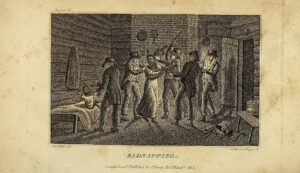
The asserted justification for legalizing slavery in the United States was the alleged inherent inferiority of black people.[1] We might ask why it was thought necessary to advance such a justification. Slavery was practiced in ancient times without being so justified. Aristotle postulated that slavery was a natural state of affairs and that some people are born to be slaves. When the Romans enslaved the Greeks they conquered, it seems unlikely that they thought them inferior. How could they think inferior a people who produced great philosophers and playwrights, a people they tasked as slaves to translate the works of those intellectuals into Latin and to teach their children Greek so as to be able to read those works in both languages.
What differed in more recent times is the difficulty of reconciling slavery with the modern notion that all people are created equal and as such have the inalienable right to liberty. When that is the professed cornerstone of your society, you need to explain why your law allows a practice which on its face seems so contrary to it. Thus, the inherent inferiority rationale as a justification for denying to black people, so as to be able to exploit their labor, the inalienable rights of white people.
But what is the need for laws preventing slaves from learning to read and write? If slaves were incapable of literacy, there would be no need for such laws. Since the very existence of such laws acknowledges the capacity, the rationale for them must therefore be the fear of what might happen if slaves learned to read and write—the fear, for instance, that the very existence of educated slaves would undermine the myth of inferiority and that educated slaves would use their education to combat slavery. Thus, when slaves were introduced to Western religion as a means of convincing them to accept slavery as God’s will, they then used their knowledge of the Bible to discredit and attack slavery. A foremost example is the slave rebellion organized by Nat Turner, who was a literate preacher and whose rebellion gave rise to laws throughout the South prohibiting the teaching of slaves to read and write.[2]
And what is the need, once slavery is abolished, for laws denying former slaves the right to own property or make contracts and forcibly segregating them from mainstream society? Again, it must be the fear of what might happen in the absence of these laws; namely, that freed slaves would succeed in social life to whites’ disadvantage. In fact, both during the era of enforced segregation and since its abolition, whenever accorded an opportunity (though less than an equal one), African Americans have excelled and have made outsized contributions to American life. During Reconstruction, despite widespread prejudice and intimidation, African-American legislators in Southern states were at the forefront of reforms that benefitted both blacks and whites. Once the color barrier was eliminated in fields of endeavor like performative athletics where the criteria of achievement (running speed, home runs hit, touchdowns scored, baskets made) are more concrete and less open to subjective bias, African Americans have often dominated. African Americans have been innovators in the arts; as originators, for example, of musical styles (jazz, rock and roll, rap) that, despite being denigrated at first, have greatly influenced American culture and have had world-wide impact. And African Americans have made major contributions, often overlooked, in intellectual and technical fields (such as in medicine or as inventors) that require formal training they were often denied.
The attainments of the Civil Rights Movement following the Second World War—the ending of enforced segregation and the prohibition of discrimination in voting, employment, housing and public accommodations—increased opportunities for African Americans somewhat and narrowed somewhat the racial inequalities resulting from the society’s explicitly racist past. Enormous inequalities remain, however. For example, while the wage gap between blacks and whites declined significantly during the 1960s and 1970s, it has risen steadily since then to about the same level as in the early 1970s.[3] Relatedly, given the link between education and earnings, while the high school graduation rates of blacks and whites, which was substantially disparate in the mid-1960s, is now almost comparable, the gap in college graduation rates has steadily increased over the years.[4] Systemic factors other than education, though, are also at play in explaining the wage gap, as shown by the fact that the wage gap is even greater as between black and white college graduates than as between less well-educated blacks and whites.[5] Perhaps that’s because the criteria of achievement in most fields of endeavor are more open to subjective bias than in performative athletics.
These ongoing inequalities are the result in part of the society’s failure to rectify the inequalities produced by slavery and segregation and in part of facially colorblind and class-based measures that have been employed since the abolition of enforced segregation to perpetuate white supremacy, especially for white elites. Better-off whites secure higher quality elementary and secondary education for their children by insulating themselves in exclusive suburbs which raise more money to fund public schools through financing systems that rely heavily on local property taxes and from which African Americans, other people of color and less-well-off whites are disproportionately excluded due in large part to local zoning ordinances that push the cost of housing there beyond their means. Many better-off whites in urban areas place their children in exclusive private schools, thereby enhancing racial segregation in public schools and draining funds from public education as those with children in private schools oppose property taxes for public schools their children do not attend. The burgeoning voucher movement is likely to worsen the racial and class divide if, as is likely, private schools are allowed to charge tuition over and above the voucher, in which case voucher schools are likely to consist of pricier and higher quality schools for children whose better-off families can afford to supplement the voucher and lower quality schools for children from less-well-off families who cannot so afford. As for higher education, because it is not free in the United States, it is more accessible to better-off whites than to people of color and whites less able to afford tuition, which has risen over the past 60 years at nearly double the overall inflation rate.[6] And legacy admissions in higher education favor elite whites and cannot be counterbalanced through race-based affirmative action now that the Supreme Court has banned it.[7] We are moving increasingly in the direction in elementary and secondary education of a tiered structure of higher quality public and private schools for disproportionately better-off whites and lower quality schools for disproportionately less-well-off African Americans, other people of color, and less-well-off whites; and in the direction of increasingly disparate access to higher education based on ethnicity and class and especially so at the more elite institutions whose graduates spawn a disproportionate share of the country’s economic and political elites.
This unequal pattern is in place because a largely white power elite has been able to use their disproportionate political and economic power to enact and take advantage of a legal regime that enables it. The regime withstands constitutional challenges because the judiciary, whose composition is impacted by elite political and economic power, has been unwilling to address laws and practices (such as the funding of public education and exclusionary zoning) that discriminate based on class and advantage the better off.[8] And it receives support from elite efforts to thwart solidarity among the less-well-off by creating ethnic divisions among them—such as the current attacks on immigrants (reminiscent of earlier anti-immigrant eras) as criminals and as taking jobs from citizens, and (reminiscent of the anti-miscegenation laws of the past) as leading to the non-whitening of America; and such as efforts to denigrate and subordinate African Americans per the claim (reminiscent of past pseudo-scientific studies like craniometry) that racially divergent scores on IQ tests are genetically based, and (reminiscent of the anti-literacy laws during slavery) per the banning from school curricula and libraries of books written disproportionately by African Americans, and (reminiscent of the retrenchment in remedying the harms of slavery in the post-Reconstruction era) per the banning of affirmative action and DEI.
The history of the past 60 or so years well illustrates the linkage of race and class in the United States and the impact of the replacement of the explicitly racist laws and practices of the past with class-based measures that perpetuate the supremacy of the largely white power elite. During that time the country as a whole has grown wealthier as measured in terms of dollars. The vast majority of the increase in wealth has gone into the hands of the power elite.[9] There have been some modest improvements in the economic status of African Americans due to concessions designed to portray the US’s image internationally as a fair society and to stifle internal upheaval by pacifying demands for greater equality. But these concessions have been hemmed in by measures that limit the upward mobility of both disadvantaged people of color and less-well-off whites so as to preserve the privileged status of the power elite. The impact of these measures, absent changes in how the society operates, is to increase the competition between people of color and whites of lesser means for access to the limited share of the society’s income and wealth that trickles down to those of lower economic status, which helps explain the ability of the power elite to foment ethnic divisions so as to distract attention from its appropriation of the lion’s share of the society’s wealth.
What is needed to overcome the power of the largely white power elite in the United States is a mass movement of the less-well-off that bridges the divisions of race and ethnicity and attains sufficient power to restructure society along more egalitarian lines.[10] The conditions under which such a movement might arise include: a critical historic moment that calls for reform, a reform program that develops as a response to the historic moment, and the mobilization of people to participate in a mass reform movement. Examples are the struggle over slavery and the threat it posed to the Union, driven largely by the Abolitionist Movement and culminating in the Civil War, the Reconstruction Era and the post-Civil War amendments to the Constitution; the collapse of the economy during the Great Depression, which attracted millions of Americans to the Democratic Party and led to the New Deal’s establishment of a federal safety net, the enhancement of workers’ rights, and the modern regulatory state; and the struggle for racial equality during the mid Twentieth Century, which was driven by the Civil Rights Movement and produced the dismantling of enforced segregation and the anti-discrimination laws of the 1960s, and which contributed to other reforms relating to the rights of women and other marginalized people and to the protection of the environment. Since then, the power elite has reasserted itself, leading to increased inequality, a retrenchment in the advancement of the rights of the disadvantaged and the protection of the environment, and a burgeoning fascist movement that has heightened racial and ethnic divisions.
A program to reinvigorate a movement to equalize economic and political power and to more equitably share the material and other goods of social life entails an extensive list of possible reforms: reforms to reduce economic inequality (higher income and wealth taxes on the well-to-do, guaranteed employment at a living wage, a social wage for those unable to work or performing unpaid services such as childrearing); reforms to guaranty access to essential goods and services (universal health care, affordable housing programs); reforms to equalize educational opportunity (state or federal financing of public education, free higher education); reforms to increase racial and economic integration (the dismantling of exclusionary zoning, mandatory public education at the elementary and secondary level); reforms to democratize the workplace (the nationalization of major industries, requiring worker representation on corporate boards of directors, the promotion of worker-owned cooperatives); reforms to equalize political power (limits on campaign contributions and expenditures, publicly financed elections, non-partisan creation of electoral districts, mandatory voting).
Achieving reforms of such magnitude through the normal political process likely requires a critical historic moment that gives rise to a progressive movement of sufficient size and strength to overcome the resistance of the power elite and remain in power for an extended period of time. As an example, during the 36 year period from 1933-1969, spanning the New Deal and Civil Rights Eras that were spawned by the Great Depression and the post-World War II Civil Rights Movement and led to the reforms of those eras, the Democrats controlled both houses of Congress for 32 years and both Congress and the Presidency for 22 years. A critical historic moment could arise if the current rightward trend leads to ever increasing inequality, increasingly severe environmental hazards, and an economic crisis comparable to the Great Depression, of which the Great Recession of the early 2000s could be a precursor.
Even if a critical moment arises, reforms will not come about without a mass movement of America’s less-well-off that overcomes the power of the largely white power elite and attains the power necessary to make it happen. Several obstacles stand in the way. One is the ethnic divisions that the power elite promotes so as to prevent mass movements threatening their privileged status and that are currently on full display. In particular, less-well-off whites must come to understand that they have more in common with less-well-off people of color than with the power elite who are exploiting them as well, and that they would be better off in a system that prevents the power elite from appropriating a disproportionate share of the goods of social life and more equitably distributes those goods throughout society.
A second obstacle is the enormous inequalities between the developed and underdeveloped nations of the world, where several billion people lack the basic necessities of life, and which contributes to the despoliation of the environment and conflicts over access to scarce resources as the underdeveloped nations strive to improve their lot while the power elites in both the developed and underdeveloped nations pursue ever more opulent life styles. We who live in developed countries must come to understand that our well-being is tied to the well-being of all our fellow human beings, that the inequalities that pervade the world threaten everyone’s long-term well-being, and that a world worth living in may require that we moderate the materialism that drives our economies and learn to appreciate a less materialistic life-style so that the world’s resources can be equitably shared among all the world’s nations and people.
It will not be easy to overcome these obstacles through the normal political process in the United States. While monied interests may dominate the Republican Party, they have substantial sway in the Democratic Party as well. And through their dominance of the media, monied interests greatly impact public opinion. This is why I say that a critical historic moment that exposes the failings of the existing order is likely needed in order to draw sufficient numbers of people to a progressive movement that either pushes the Democratic Party in that direction or enables the formation of a progressive party that attains power. But critical moments can also move societies in a regressive direction, as in Nazi Germany and as is now happening in the US and other countries. The task of those of us who believe in the possibility of progressive change through the political process is to continue advocating progressive ideas and participating in progressive movements that advance the cause. Without that, progressive change, though not guaranteed, will not come about through normal politics. And if not, what then?
Notes
[1] See, e.g., Dred Scott v. Sandford, 60 U.S. 393 (1857), in which the Supreme Court struck down the Missouri Compromise, which abolished slavery in the northern parts of the territories of the United States, as an unconstitutional taking of slaveholders’ property. The Court also gratuitously held that people of African descent were not citizens even if freed or never enslaved. The Court’s justification for its decision was that people of African descent were “a subordinate and inferior class of beings,” who were “altogether unfit to associate with the white race either in social or political relations,” who “had no rights which the white man was bound to respect,” and who could “therefore claim none of the rights and privileges which [the Constitution] provides for and secures to citizens of the United States.”
[2] Gavin Howe, Unveiling the Dark History of Anti-Literacy Laws: Oppression’s Tool (Sept. 18, 2025), at https://lawshun.com/article/why-were-there-anti-literacy-laws; Smithsonian American Art Museum, Literacy as Freedom, at https://americanexperience.si.edu/wp-content/uploads/2014/09/Literacy-as-Freedom.pdf.
[3] Adewale A. Maye, Chasing the dream of equity (August 1, 2023), at https:// www.epi.org/publication/chasing-the-dream-of-equity.
[4] U.S. Census Bureau, Percent of People 25 Years and Older Who Have Completed High School or College by Age, Race, Hispanic Origin and Sex: Selected Years 1940-2024, at https:// view.officeapps.live.com/op/view.aspx?src=https%3A%2F%2Fwww2.census.gov%2Fprograms-surveys%2Fdemo%2Ftables%2Feducational-attainment%2Ftime-series%2Fcps-historical-time-series%2Ftaba-2.xlsx&wdOrigin=BROWSELINK.
[5] U.S. Census Bureau, Mean Earnings of Workers 18 Years and Older, by Educational Attainment, Race, Hispanic Origin, and Sex:1975-2023, at https:// view.officeapps.live.com/op/view.aspx?src=https%3A%2F%2Fwww2.census.gov%2Fprograms-surveys%2Fdemo%2Ftables%2Feducational-attainment%2Ftime-series%2Fcps-historical-time-series%2Ftaba-3.xlsx&wdOrigin=BROWSELINK.
[6] Krystle Dodge, College Tuition Inflation: A Deep Dive Into the Soaring Cost of College Over the Past 60 Years (July 24, 2024), at https://academicinfluence.com/inflection/college-life/college-tuition-inflation-deep-dive.
[7] Students for Fair Admissions, Inc. v. President and Fellows of Harvard College, 600 U.S. 181 (2023).
[8] San Antonio Independent School District v. Rodriguez, 411 U.S. 1 (1973) (upholding state public school financing scheme relying heavily on local property taxes and resulting in substantially lower funding for poorer school districts as rationally related to the legitimate purpose of fostering local control of public education); Village of Arlington Heights v. Metropolitan Housing Development Corp., 429 U.S. 52 (1977) (upholding zoning practices that disproportionately exclude ethnic minorities absent a showing of racially discriminatory purpose, and implicitly upholding zoning practices that disproportionately exclude lower income people by pushing the cost of housing beyond their means as rationally related to the legitimate purpose of preserving property values).
[9] Economics Insider, How U.S. Wealth Inequality Changed from 1965 to 2025 (February 10, 2026) at https://economicsinsider.com/us-wealth-inequality-1965-2025; Urban Institute, Nine Charts about Wealth Inequality in America (April 25, 2024), at https:// apps.urban.org/features/wealth-inequality-charts.
[10] See Thomas Kleven, Systemic Classism, Systemic Racism: Are Social and Racial Justice Achievable in the United States?, Connecticut Public Interest Law Journal, vol. 8(2):37-83 (2009).
Author

Latest Issue
2026: Vol. 25, No. 2

Latest Issue
2026: Vol. 25, No. 2

Essays
Essays
By Thomas Kleven: White Supremacy, White Insecurity, and the Struggle for a More Egalitarian Social Order
Essays
Essays
Essays
Essays
Essays
Essays
Essays
The Legacy of Jürgen Habermas
By Gordon Finlayson: Habermas’s Legacy: The Philosophy of the Public Sphere
Essays
The Legacy of Jürgen Habermas
By Kenneth Baynes: Habermas’s Case for Democracy: the Public Sphere, Communicative Reason and the ‘Co-originality’ of Public and Private Autonomy
Essays
The Legacy of Jürgen Habermas
By John Abromeit: Jürgen Habermas’s Image of the United States as a Model of “Modernity”: From Attachment to Melancholy
Poetry
Allen Ginsberg's Centennial
Poetry
Allen Ginsberg's Centennial
Poetry
Allen Ginsberg's Centennial
Poetry
Allen Ginsberg's Centennial
By Eileen Myles: Jan. 25
Poetry
Allen Ginsberg's Centennial
By Jim Cohn: For Allen Ginsberg, on His 100th Birthday (3 June 1926 – 3 June 2026)
Poetry
Allen Ginsberg's Centennial
By Eliot Katz: Letter to Allen on the State of the State, March 2026
Book Reviews
By George Lundskow: Cynthia Miller-Idriss’ Man-Up: The New Misogyny and the Rise of Violent Extremism
Book Reviews
Book Reviews
By Benjamin Heim Shepard: Jeremy Varon’s Our Grief is Not a Cry for War
